

Yes, breathing nail dust is not good for you. Small bits from nail care can get into your lungs. This can cause allergies or make it hard to breathe. Nail dust often has dangerous chemicals like toluene, DBP, and formaldehyde. These chemicals can lead to serious health problems, as shown below:
| Chemical | Main Health Risks |
|---|---|
| Toluene | Hurts the brain and nerves; found in breast milk of mothers who breathe it in |
| DBP | Damages hormones and lungs |
| Formaldehyde | Can cause cancer and blood problems |
Good airflow and a nail dust collector can help lower the risk. Clean air is important when doing nail work.
Key Takeaways
- Breathing nail dust can hurt your lungs. It can cause health problems like asthma and allergies.
- Using a nail dust collector with HEPA filters helps a lot. It lowers the chance of breathing in bad dust and chemicals.
- Good airflow and cleaning your workspace often are very important. They help keep the air clean when doing nail care.
- Nail technicians and people at home should wear masks and gloves. This keeps them safe from nail dust.
- Being around nail dust for a long time can cause health problems that last. So, it is very important to take steps to stay safe.
What is nail dust?
Nail dust consists of tiny fragments from nails, which can come from both natural and artificial nails. It is generated when using tools such as electric nail files or polishing blocks, and contains fragments of keratin from natural nails, as well as residues of acrylic resins and gels. When nail dust is suspended in the air, it can be inhaled, which is harmful to health. Nail dust is particularly common in places where manicures are frequently performed.
How nail dust forms
Nail dust is produced when manicuring or filing nails. Electric files and nail files break nails into fine dust. This dust is released into the air and settles around the nails. This happens both at home and in nail salons. Nail dust can mix with chemicals in nail products, increasing their potential harm.
Nail dust is made when you use tools like electric files, grinders, or buffers. It has tiny bits of keratin from real nails and materials from fake nails like acrylics and gels.
Common sources
Nail dust comes from many things. The most common ways to make nail dust are:
- Filing real or fake nails
- Putting on or taking off acrylics and gels
- Using electric nail drills or buffers
Nail salons perform these procedures many times a day. Poor ventilation can cause nail dust to remain trapped in the air. Studies show that most nail salons generate more dust than homes. People who do their own nails at home also generate nail dust, especially when using power tools.
Nail dust isn’t just harmful to nail technicians. Anyone trimming or filing their nails can inhale nail dust. Good ventilation and cleanliness help protect your health.
Nail dust hazards
Nail dust hazards can hurt people who work in nail care or go to salons. These hazards can damage the lungs and cause health problems. Nail dust has tiny pieces that float in the air for a long time. When people breathe these in, they can face serious risks.
Respiratory risks
Inhaling nail dust is harmful to the lungs. These particles are extremely small, less than 5 micrometers. These tiny particles can penetrate deep into the lungs and reach the alveoli. Once in the alveoli, they irritate the lungs, causing difficulty breathing. Many people report symptoms such as sneezing, runny nose, nasal congestion, or shortness of breath after inhalation. Some people may also experience headaches, chest tightness, or eye strain.
Podiatrists who breathe nail dust get asthma four times more than most people. This shows nail dust is linked to bad lung health.
Nail dust can also carry germs. These include bacteria and fungi that can cause lung infections. The table below shows some dangerous things in nail dust and what they do:
| Hazardous Substance | Source/Effect |
|---|---|
| Microbial debris | Found in nail dust, can lead to breathing problems and infections. |
| Viable fungal elements | Includes dermatophytes like Trichophyton rubrum, which can cause skin infections. |
| Acetone | Causes headaches, dizziness, and sore eyes, skin, and throat. |
| Acetonitrile | Can cause trouble breathing, nausea, and weakness. |
| Butyl acetate | Linked to headaches and irritation of body parts. |
| Dibutyl phthalate (DBP) | Can cause nausea and sore eyes, skin, and throat. |
| Ethyl acetate | Causes irritation and can make you faint if there is a lot. |
| Ethyl methacrylate (EMA) | Linked to asthma and trouble focusing. |
| Formaldehyde | Known to cause bad lung problems and may cause cancer. |
Breathing nail dust can cause asthma attacks, sinus swelling, dry cough, and wheezing. These signs show nail dust is dangerous and can hurt your lungs.
Allergic reactions
Nail dust can cause allergies in many people. This dust often contains fungi, such as Trichophyton, which can trigger allergic reactions in sensitive individuals. Acrylic and methacrylate esters in nail products are also common allergens. They can cause allergic contact dermatitis, leading to symptoms such as redness, swelling, and itching.
Nail dust can trigger allergic reactions over time. This means that prolonged inhalation of the dust can lead to allergies. Some people can even react to small amounts of dust. Symptoms include sneezing, itching, coughing, and sometimes asthma. Nail salon workers and customers face these risks daily.
Long-term effects
Long-term inhalation of nail dust can lead to persistent health problems. This dust, which floats in the air, may contain harmful bacteria such as Aspergillus fumigatus. These bacteria can enter the body and cause various health issues. Studies have shown that podiatrists have higher levels of antibodies against these bacteria in their blood. This means their bodies are better able to fight off infections caused by nail dust.
Nail dust can also lead to long-term lung disease. People may experience symptoms such as asthma, swollen eyelids, runny nose, and eczema. Bacteria such as Candida, Aspergillus, and Staphylococcus aureus can cause serious illness if they enter the body. Over time, the lungs can be damaged, leading to difficulty breathing and increased susceptibility to illness.
It is important to protect yourself from nail dust hazards. Using a nail dust collector and keeping your work area clean can help lower your risk and keep you healthy.
Who is at risk?
Nail technicians
Nail technicians are among the groups most exposed to the dangers of nail dust. They work daily in nail salons where the nail products they use generate fine dust. Manicures, shaping, and buffing all produce dust, which nail technicians frequently inhale. This can lead to breathing problems, allergies, and even asthma and chronic obstructive pulmonary disease (COPD). Nail dust also contains harmful chemicals. To maintain their health, nail technicians take several safety precautions. The table below lists their protective measures:
| Measure | Description |
|---|---|
| Personal Protective Equipment | Nail technicians wear gloves and N95 filtering facepiece respirators to reduce inhalation risk. |
| Face Masks | N95 masks filter small particles and chemicals better than paper masks. |
| Ventilation Systems | Good ventilation and air filtration systems capture dust and lower inhalation risk. |
Nail technicians need to know these risks. They should always use the right protection to stay safe.
At-home users
People who do their own manicures at home also face risks. Many people are unaware that nail dust can be harmful. Those doing manicures at home often don’t wear masks or gloves, and they may be working in poorly ventilated rooms. Filing or buffing nails generates dust, which, along with chemicals, can become airborne. These individuals may inhale this dust and chemicals, potentially triggering allergies or respiratory illnesses. Customers getting manicures at home face the same risks. For safety reasons, everyone should wear masks and ensure windows are open for ventilation.
At-home users can stay safe by using a nail dust collector and cleaning their workspace often.
People with health conditions
People with health problems are at higher risk from nail dust. Those with asthma, COPD, or allergies can react more to dust and chemicals. The table below shows how some health problems make people more at risk:
| Pre-existing Condition | Increased Vulnerability to Nail Dust Hazards |
|---|---|
| Asthma | Yes |
| COPD | Yes |
| Allergies | Yes |
These people should stay away from nail dust or use extra safety steps. Nail technicians should ask clients about health problems before starting. This helps stop bad reactions and keeps everyone safe.
Nail dust collector benefits

How dust collectors work
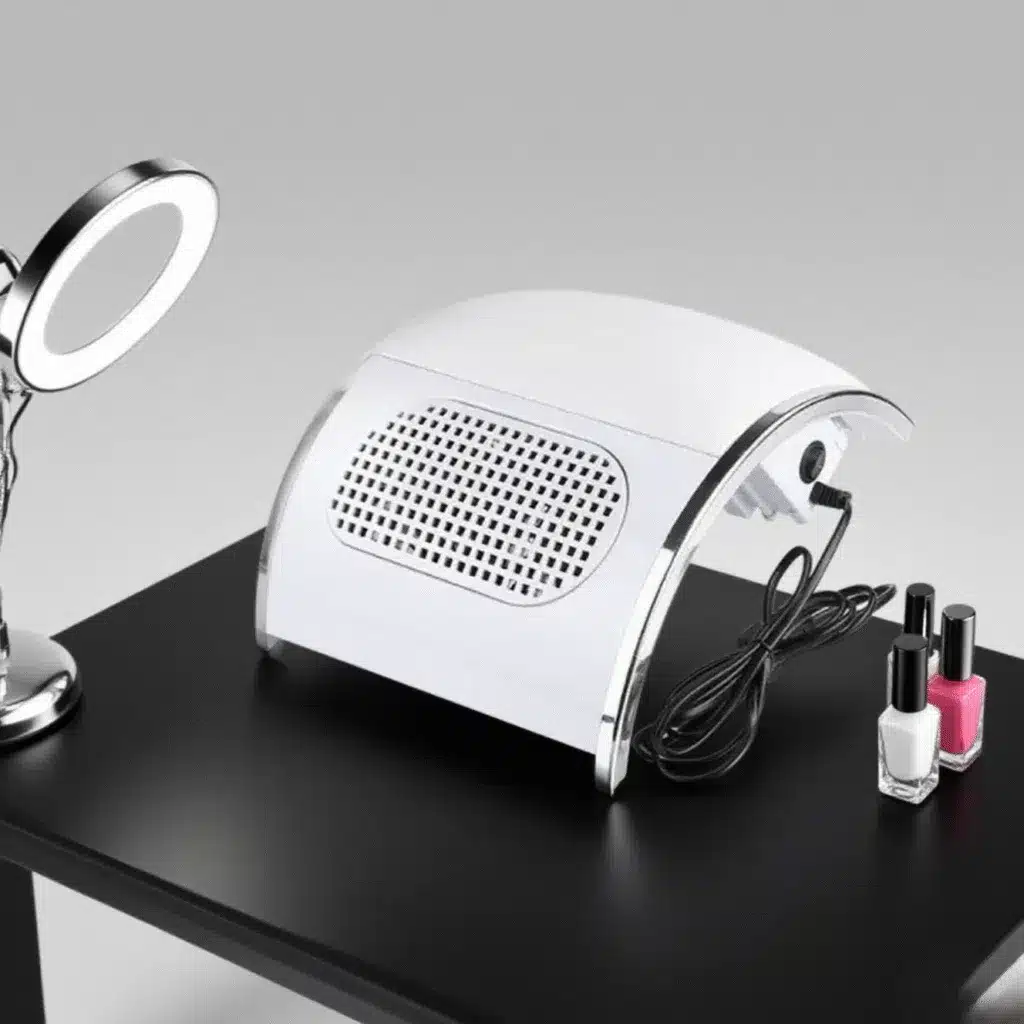
Nail dust collectors can effectively remove dust and harmful substances from the air. The LANCOLOR nail dust collector boasts powerful suction, removing dust at its source and creating a cleaner working environment. This vacuum cleaner operates quietly and won’t disturb others. It uses special filters such as HEPA and activated carbon to capture fine dust and remove odors. LANCOLOR’s designs have won numerous patents and quality awards.
- Multi-stage filters catch dust and vapors.
- HEPA filters grab very small dust and help keep air clean.
- Activated carbon filters get rid of smells and bad vapors.
The dust collector stops dust before it spreads. This helps keep everyone safe in the room. The air stays fresh, and the workspace looks neat.
Cheap nail dust collectors cannot handle all the bad dust and vapors. Their filters fill up fast, and weak suction misses tiny dust. These cheap machines do not really protect you. They make people think they are safe, but they are not. This can lead to health problems later.
Health and safety advantages
Using a dust collector helps keep people healthy and safe. The machine lowers the chance of breathing in bad dust. It also makes the air better in salons and homes. Clients and workers feel safer and more comfortable.
- Nail dust collectors lower health risks from breathing in bad dust.
- Better air in salons makes it nicer for clients and workers.
- A good workspace can help people work better and make clients happy.
A professional nail dust collector helps nail salons comply with hygiene regulations. It maintains a clean environment, reducing the risk of asthma or skin problems. A clean and tidy salon environment fosters customer trust. Furthermore, the dust collector helps salons adhere to relevant laws and regulations, which is crucial.
Choosing a nail dust collector
Key features to consider
Choosing the right nail dust collector helps keep your space clean and hygienic. LANCOLOR offers a variety of nail dust collectors, including countertop, portable, and rechargeable models. Each type is suitable for different user groups. Whether you are an expert or a beginner, you can find a product that suits you. Here are the most important factors to consider when choosing a nail dust collector:
- Efficiency: Strong suction grabs dust fast and keeps air fresh.
- Power and Performance: High power and two motors make it work better and last longer.
- Noise Levels: Quiet machines help clients and workers feel comfortable.
- Filter Types: HEPA filters catch tiny dust and clean the air well.
- Portability and Design: Small and easy-to-carry machines are simple to move and store.
- User Experiences: Reviews from other people show if the machine works well.
A dust collector with smart features makes nail care safer and easier.
Maintenance tips
Taking care of your dust collector helps it last longer. Here are some tips to follow:
- Clean the filter often and wipe the outside with a wet cloth.
- Change the filters when the company says you should.
- Look at the user manual if the machine stops working right or sounds weird.
The table below shows how often to empty and change filters. How often you do this depends on how many clients you have, what products you use, and how much nail work you do.
| Recommendation | Frequency |
|---|---|
| Empty | Weekly |
| Replace | Every 1–3 months |
| Factors influencing | Client volume, Product type, Frequency of removals or debulking |
Taking care of your dust collector keeps the air clean and helps the machine last longer.
Nail dust can be very bad for your health. Everyone who does nails needs to stay safe. Using a good dust collector, such as LANCOLOR, helps people breathe better and keeps the area clean.
- It stops you from breathing in bad dust.
- It makes cleaning faster and helps clients feel happy.
- It pulls in dust right away with strong suction and HEPA filters.
You should put the dust collector in the middle, clean it often, and keep things tidy. Buying a good dust collector helps everyone stay safe and healthy.
FAQ
What is the best way to reduce nail dust exposure?
A person can use a nail dust collector with HEPA filters. They should keep the workspace clean and open windows for fresh air. Wearing masks and gloves also helps protect the lungs.
Can nail dust cause allergies?
Nail dust can trigger allergies in sensitive people. They may sneeze, cough, or feel itchy. Some may develop skin rashes or asthma after repeated exposure.
Who needs a nail dust collector?
Nail technicians and at-home users benefit from a dust collector. People with breathing problems or allergies should use one to stay safe during nail care.
How often should filters be changed in a dust collector?
Filters should be changed every one to three months. The frequency depends on how often the machine is used and the number of clients served.
Are nail dust collectors noisy?
Most modern dust collectors operate quietly. They allow technicians and clients to work comfortably without loud sounds.