
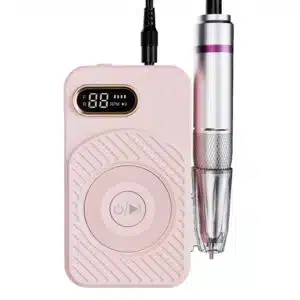
The answer depends on how they are used. When used with proper technique, nail drills (also known as electric files or e-files) can improve efficiency and precision in nail shaping, product removal, and surface preparation. However, improper use or excessive filing may lead to nail thinning, heat damage, or an increased risk of infection.
This article explores the benefits and potential risks of nail drills, along with safe usage practices to help protect natural nail health.
Key Takeaways
- Nail drills are safe and beneficial for nails when used with proper technique
- They reduce nail care time by up to 75% and deliver more precise results than manual files
- Choosing the right nail drill bits and speed settings is critical for protecting natural nails
- Always use light pressure and start with low speeds (3,000–5,000 RPM) on natural nails
- Clean and disinfect all tools after every use to prevent bacterial infections
- Beginners should practice on fake nails before working on real nails
- The LANCOLOR Nail Drill Machine offers excellent safety features for all skill levels
Benefits of Nail Drills

Unmatched Efficiency and Speed
Nail drills revolutionize nail care by drastically reducing the time needed for manicures and pedicures. Electric files shape, smooth, and remove polish much faster than manual files.
According to a 2025 industry survey:
- Professional nail technicians complete appointments 40% faster with nail drills
- Home users spend 75% less time on nail care
- Salons can serve 25% more clients daily with electric files
The LANCOLOR Nail Drill Machine reaches speeds of up to 45,000 RPM (revolutions per minute), making quick work of gel polish removal and acrylic shaping.
Superior Precision and Results
Nail drills provide greater control compared to manual nail files, allowing for more consistent shaping, smoothing, and surface preparation. With adjustable speed settings and interchangeable bits, users can adapt the tool for different nail care tasks with improved accuracy and efficiency.
Most nail drills are designed with ergonomic handles to help reduce hand fatigue during extended use. Quick-change bit systems also make it easier to switch between functions without interrupting the workflow.
Many users and nail technicians report smoother and more even results when using electric files compared to traditional manual filing methods.
Versatile Nail Drill Bits
Nail drills work with a wide variety of specialized bits for every step of nail care. The LANCOLOR Nail Drill comes with 6 professional-grade grinding heads:
| Bit Type | Best For |
|---|---|
| Carbide bits | Fast acrylic/gel removal and shaping |
| Diamond bits | Smoothing nail surfaces and cuticle work |
| Ceramic bits | Gentle on natural nails, runs cool |
| Flame bits | Cleaning under nails and around cuticles |
| Mandrel & sanding bands | Buffing and finishing |
| Needle bits | Reaching small corners and tight spaces |
Suitable for Both Professional and Home Use
Nail drills are no longer used only in professional salons. Today, many electric file models are designed with simpler controls and improved safety features, making them accessible for both beginners and experienced nail technicians.
The table below lists the differences between Professional Nail Drills and Home-Use Nail Drills:
| Feature | Professional Nail Drills | Home-Use Nail Drills |
|---|---|---|
| Power Range | 35,000–50,000 RPM | 10,000–25,000 RPM |
| Durability | Industrial-grade construction | Consumer-grade materials |
| Speed Control | Wide, precise range | Basic speed settings |
| Safety Features | Overheat protection, automatic shut-off | Basic on/off switch |
| Price | $100–$500 | $20–$100 |
The LANCOLOR Nail Drill bridges the gap between professional and home use, offering salon-quality performance at an affordable price.
Potential Risks of Improper Use
While nail drills are safe when used correctly, they can cause damage if misused:
Nail Thinning and Weakness
The most common risk is over-filing, which removes too many layers of the natural nail plate. This leads to thin, brittle nails that bend and break easily. To avoid this:
- Never file the same spot for more than 2–3 seconds
- Use light pressure – let the drill do the work
- Give your nails 1–2 weeks of rest between full sets
Infection Risk
Dirty nail drills can harbor bacteria and fungi, which can cause infections if they enter small cuts or breaks in the skin. Always clean and disinfect your drill and bits after every use.
Overuse Injuries
Using a nail drill for too long or at too high a speed can cause:
- Heat buildup and nail pain
- Skin irritation and cuts
- Hand fatigue and strain
Take 5-minute breaks every 20 minutes and always use the lowest effective speed for the task.
⚠️ SAFETY WARNING: Always wear safety goggles and a dust mask when using a nail drill. Flying particles can cause eye injuries, and nail dust can irritate your lungs.
How to Use Nail Drills Safely

Choose the Right Nail Drill
A high-quality nail drill with proper safety features is essential. Look for:
- Overheat protection that automatically shuts off the motor
- Smooth, adjustable speed control
- Ergonomic, non-slip handle
- International safety certifications (CE, RoHS)
The LANCOLOR Nail Drill includes all these features, plus a rechargeable battery that provides up to 10 hours of continuous use.
Master Proper Technique
Follow these guidelines for safe, effective use:
- Start slow: Always begin with the lowest speed setting and gradually increase
- Use light pressure: Pressing too hard is the #1 cause of nail damage
- Keep the drill moving: Never hold it in one spot for more than a few seconds
- Hold like a pen: Grip the drill loosely for better control
- Practice first: Beginners should practice on fake nails for 2–3 hours before using on real nails
Recommended Speed Settings
Use the lowest speed that gets the job done:
| Task | Recommended Speed (RPM) |
|---|---|
| Natural nail filing & shaping | 3,000–5,000 |
| Cuticle care | 5,000–7,000 |
| Gel polish removal (beginners) | 8,000–10,000 |
| Gel polish removal (professionals) | 10,000–12,000 |
| Acrylic bulk removal & shaping | 14,000–16,000 |
Hygiene and Maintenance
Proper cleaning is non-negotiable for safe nail drill use:
- Clean: Remove all debris from the drill and bits with a brush
- Disinfect: Soak bits in 70% isopropyl alcohol for at least 30 minutes
- Sterilize: For salon use, autoclave metal bits between clients
- Store: Keep clean tools in a sealed, dry container
Replace your drill bits every 3–6 months with regular use. Dull bits require more pressure and cause more nail damage.
Who Should (and Shouldn’t) Use Nail Drills
Perfect For:
- Professional nail technicians
- Home users who do their own nails regularly
- Anyone who wears gel polish or acrylic extensions
- People who want faster, more precise nail care
Not Recommended For:
- People with very weak, thin, or damaged nails
- Anyone with active nail infections, open wounds, or skin conditions
- Complete beginners who haven’t practiced on fake nails
- Those who experience pain or discomfort when using electric files
If you have weak nails, stick to manual files and give your nails time to recover before trying an electric drill.
Conclusion
Nail drills are not inherently good or bad for your nails – it all depends on how you use them. When used correctly with the right technique, speed settings, and bits, they can make nail care faster, easier, and more professional-looking.
The key to safe nail drill use is patience and practice. Start slow, use light pressure, and always prioritize the health of your natural nails. Investing in a high-quality nail drill with safety features, like the LANCOLOR Nail Drill Machine, will also help prevent accidents and damage. To learn more about the LANCOLOR Nail Drill Machine and find the perfect nail care tools for your needs, visit our website today.
FAQ
What is a nail drill used for?
A nail drill (electric file) is used for shaping, smoothing, and cleaning nails. It removes old gel polish and acrylic extensions, prepares nails for new applications, and helps with cuticle care.
Can beginners use a nail drill safely?
Yes, beginners can use nail drills safely. Start with low speeds (3,000–5,000 RPM), practice on fake nails first, and read the instruction manual carefully. The LANCOLOR Nail Drill is designed to be user-friendly for beginners.
How often should I clean my nail drill bits?
You should clean and disinfect your nail drill bits after every single use. Soak them in 70% isopropyl alcohol for at least 30 minutes to kill bacteria and prevent infections.
Do nail drills hurt natural nails?
Nail drills do not hurt natural nails when used correctly. Using light pressure, the right bit, and the proper speed will protect your nail plate. Overuse or too much pressure can cause thinning and damage.
What safety gear do I need when using a nail drill?
Always wear safety goggles to protect your eyes from flying particles and a dust mask to avoid inhaling nail dust. Gloves are also recommended for better grip and hygiene.
How often should I replace my nail drill bits?
Replace your nail drill bits every 3–6 months with regular use. Dull bits require more pressure to file, which can damage your nails. Replace sanding bands after each use and carbide bits when they become visibly worn.